Meme Coin Trading, Lessons From a Pro Challenge
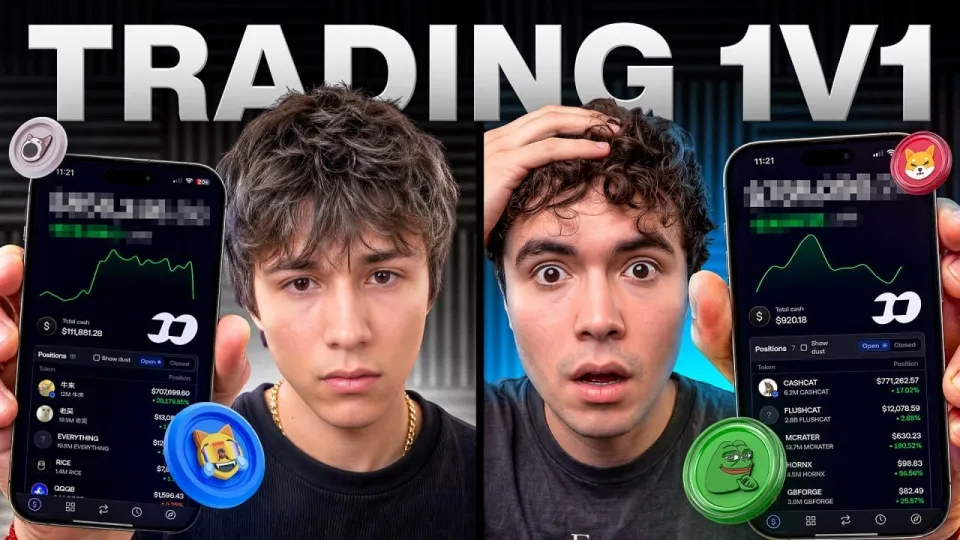
Video: I Challenged A Pro Memecoin Trader (Who Won?)
Want articles like this for your own video to promote it on YouTube and Google? Order them through the Telegram bot @sat_sit_bot. The bot writes and publishes the articles itself (with your YouTube video embedded) on popular topical websites (no ads). Free trial — 50 articles.
· based on the channel insentos
Key takeaways
- Meme coins are launched mostly on Solana and Ethereum and priced purely by supply, demand, and attention — there is no cash flow or earnings to value.
- The insentos challenge video pits the host against a guest trader live on stream, using Axiom Pro as the trading terminal and FOMO.family for community access.
- Live trading on camera shows the mechanics most guides skip: sizing, slippage, liquidity checks, and selling into strength instead of hoping for a bigger candle.
- Viewers noted that streamed challenges often end in losses, which reflects the real base rate of memecoin scalping rather than bad luck.
- A repeatable process — position sizing, a written exit plan, and liquidity screening — matters more than picking the next 100x ticker.
Meme coin trading is the practice of buying and selling tokens whose price is driven almost entirely by attention, liquidity, and community momentum rather than revenue or earnings — and the fastest way to learn it is to watch someone do it live, with real money and real slippage. That is exactly the format of the insentos challenge video, where the host and a guest trader trade side by side on stream. For viewers who want to follow along with the same tools, the creator points to FOMO.family for community access and to Axiom as the trading terminal used in the session.
What a meme coin actually is and why it moves so fast
A meme coin is a token with no underlying business, so its price is set purely by the balance of buyers and sellers at any given second. That single fact explains nearly every behavior you see in the market: a launch with $5,000 of liquidity can double on a few thousand dollars of buying and collapse just as fast when the first large holder sells.
Key structural traits worth knowing before you buy anything:
- Supply is fixed and public. Total supply, holder count, and the distribution of the top wallets are visible on-chain, so you can check concentration before entering.
- Liquidity is the real risk metric. A token with thin liquidity will give you terrible fills on the way in and worse on the way out; slippage is not a fee, it is the market moving against you.
- Narratives rotate in hours, not weeks. A ticker that trends at 09:00 can be dead by 15:00, which is why holding through a drawdown is a very different decision than scalping a launch.
- Most launches fail. The base rate is brutal: the majority of new tokens never recover their first-day high, so the strategy has to survive being wrong most of the time.
How the insentos challenge is structured
The video is a live head-to-head: the host, who trades meme coins full time, challenges a guest described as a professional, and both trade in real time while explaining their thinking. The session runs roughly forty minutes, split between a long trading-and-advice block, a shorter segment trading alongside a second participant, and a closing recap.
The most useful part is not the profit and loss at the end — it is the narration. The guest keeps asking the host to explain his reasoning mid-trade, which turns the stream into a running commentary on entries, invalidation levels, and when to take profit. That is the closest thing to a live course you get without paying for one.
The mechanics a live session exposes
Live trading reveals the operational details that written guides tend to skip, and those details are usually where beginners lose money. Watching someone execute under time pressure makes four things concrete.
- Sizing before conviction. Position size is decided before the trade, not after the chart looks good. A trader risking a fixed small percentage per attempt can be wrong repeatedly and still be in the game.
- Liquidity and holder checks first. Before buying, the trader looks at pool depth, top-holder concentration, and whether the contract has obvious red flags. Skipping this step is how people end up unable to sell.
- Selling into strength. Exits happen while buyers are still there. Waiting for one more green candle is the most common way a winning trade turns into a loss.
- Speed versus patience. Entries are fast, but the decision to hold or cut is deliberate. Scalping meme coins is a reflexes game on entry and a discipline game on exit.
Axiom, the terminal linked in the video description, is built around exactly this workflow: fast token discovery, charting, and one-click execution on Solana and other chains. Tools do not create edge, but slow tools destroy it.
Common questions from newer traders
The comment section under the challenge reads like a beginner FAQ, and the recurring doubts are worth addressing directly because they come up in every meme coin community.
"Every streamed challenge ends in a loss — is this just gambling?" Partly, and that is the honest answer. Short-horizon meme coin trading has a high variance and a negative average outcome for most participants once fees and slippage are counted. What separates a trader from a gambler is that the trader defines risk per trade, keeps a record, and stops when the plan says stop. If your entire bankroll is on the table, the outcome is a coin flip regardless of skill.
"Isn't it easier when you have a big audience?" Having followers helps with distribution and information flow, but it also means your own buys move the price against you and your sells are watched. Size cuts both ways: a large account cannot quietly accumulate a micro-cap position, and it cannot exit one without signaling.
"How do I actually learn this as a beginner?" Watch full sessions rather than highlight clips, then paper-trade the same setups for a week and compare your decisions to what the trader did. The gap between your instinct and theirs is your curriculum.
"Why can't I get into the groups everyone mentions?" Access is often gated by invite, paid tiers, or capacity limits, which is why creators publish a single entry link instead of an open server. The FOMO.family link in the description is that entry point for this channel's audience.
Risk rules that survive a bad streak
Risk management is the only part of meme coin trading that compounds reliably, because the market's upside is unpredictable while your downside is entirely under your control. A few rules hold up across chains and market conditions.
- Cap any single position at a small fixed share of your trading stack — a common starting point is 1–2% — so a total loss on one token is survivable.
- Decide the exit before the entry: a target, a stop, and a time limit. If the token has not moved within your window, the thesis is stale.
- Never average down into a falling micro-cap. Liquidity can vanish between your first and second buy.
- Track every trade with entry, exit, size, and reason. After thirty trades the pattern in your own data will teach you more than any video.
- Treat profits as real money. Rotating gains back into the next launch is how a good week becomes a flat month.
Useful links
- FOMO.family — community access via the creator's referral link
- Axiom — trading terminal used in the session
- insentos on X
- insentos on Instagram
- insentos on TikTok
Bottom line
The insentos challenge is valuable less as entertainment and more as a record of how a working meme coin trader thinks in real time: check liquidity, size small, narrate the plan, and take profit while the bid is still there. The format also shows the uncomfortable truth viewers keep pointing out — most live sessions end red, because the base rate of short-term meme coin trading is unforgiving. Use the video as a template for process, not as a promise of returns, and start with FOMO.family if you want to follow the channel's community side of the workflow.
Questions & answers
Is meme coin trading profitable for beginners?
For most beginners it is not, because fees, slippage, and a high failure rate on new launches mean the average outcome is negative. Profitability comes from strict position sizing and fast exits rather than from picking better tickers. Treat the first months as paid education with a capped budget.
Which tools do traders use for Solana meme coins?
The typical stack is a fast terminal for discovery and execution, an on-chain explorer for holder and liquidity checks, and a wallet you control. The insentos session uses Axiom as the terminal and points viewers to FOMO.family for community access. Speed matters, but the checks before buying matter more.
How much should I risk on a single meme coin?
A common rule is 1–2% of your trading stack per position, so a string of losses does not end your run. Size is set before the trade, not adjusted mid-drawdown. Anything you cannot afford to lose entirely should not be in a micro-cap token.
Why do streamed trading challenges often end in losses?
Live sessions are short, use real liquidity, and are judged on a small sample, so variance dominates the result. Many participants also trade sizes that make slippage significant. A losing stream is not proof the method fails, but it is a fair reminder of how often individual trades go wrong.
Source: I Challenged A Pro Memecoin Trader (Who Won?) · Markdown version